
TESLA Bikers Episode 35 – The Difference Between CRI and CCT – Why Color and Quality of Light Matter
When choosing lights, we often consider appearance, price, or energy efficiency. However, parameters like CRI and CCT are equally important, as they significantly affect lighting quality and comfort in a room.

CRI: Color Rendering Index, which determines fidelity
CRI (Color Rendering Index) It's a parameter that indicates how accurately a light source can reproduce the colors of objects compared to an ideal reference light. Values range on a scale from 0 to 100, with a higher number meaning more faithful color rendition.
Practical breakdown of CRI values:
- Pod 80The colors appear flat and often change their shades.
- 80-90Standard quality suitable for most home spaces
- 90-95: Excellent color reproduction for demanding applications
- 95+Professional quality for galleries, salons, or photography studios
Consider this scenario: you buy a new sweater at a store with low CRI lighting. At home, in daylight, you realize the color is completely different from what you expected. This is precisely why many fashion boutiques invest in high CRI lighting – customers see clothes in their true colors.

CCT: Correlated color temperature determines the atmosphere
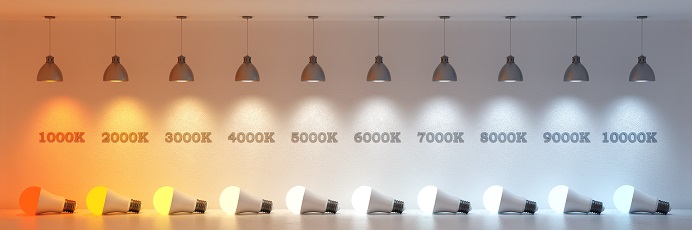
CCT (Correlated Color Temperature) expresses the „color“ of light and is measured in Kelvin (K). This parameter says nothing about the quality of light, but determines whether the light will appear warm, neutral, or cool.
Basic temperature categories:
- 2700 – 3000 K (warm white): A yellowish hue reminiscent of a sunset, ideal for creating a relaxing atmosphere in living rooms and bedrooms
- 3,500–4,000 K (neutral white)Balanced white light similar to morning sun, suitable for kitchens and bathrooms
- 5,000–6,500 K (cool white)Bluish-white light mimicking the midday sun, promotes concentration in workspaces
Choosing the right temperature not only affects the functionality of a space but also our mood and biorhythms. Cool light activates us, while warm light helps us relax.
Why is the combination of these two parameters important?
Many people, when choosing lighting, only consider the color temperature of the light, but overlook the color rendering index. The result can be light that, while having a pleasant temperature, makes everything in the room look dull and washed out due to a low CRI.
Practical combination examples:
- Living RoomCCT 2700 – 3000 K + CRI 90+ = cozy atmosphere with true-to-life colors of furniture and decorations
- Kitchen: CCT 3500 - 4000 K + CRI 90+ = functional lighting where you can recognize the freshness of food
- StudyCCT 5000 K + CRI 85+ = stimulating environment with good detail resolution
How to choose the right lighting?
When purchasing new lighting, follow these rules:
First, determine the purpose of the room and choose the appropriate color temperature accordingly. For relaxation zones, choose warm tones, and for work areas, choose cooler light.
Always check the CRI value – For home use, we recommend a minimum of 80, ideally 90+. Cheap LED bulbs often lack this parameter or have a low one.
Consider adjustable lighting with the option to change both temperature and light intensity according to the time of day and current needs.
Investing in quality pays off
High-quality lighting with a high CRI and a carefully selected color temperature can transform any space. You’ll appreciate it during your daily activities—from cooking to reading to relaxing. In addition, modern LED technology allows you to achieve excellent performance while keeping energy consumption low.
Remember: proper lighting isn't just about being bright enough. It's about creating an environment where you feel good and where all colors look as they should. CRI and CCT are key parameters that will help you achieve this.